
Civil/Utilities
Geosynthetic Clay Liners (GCL) Reliable Containment for Environmental Protection
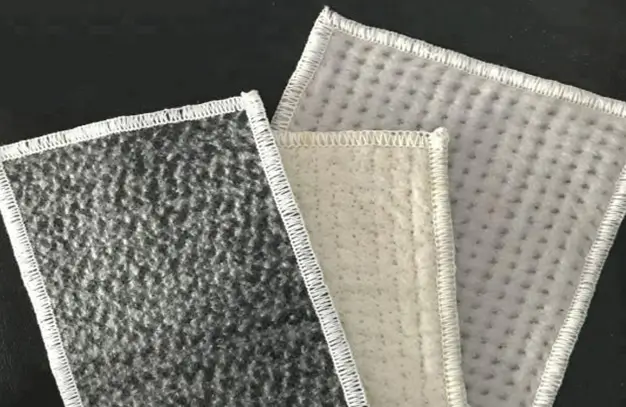
Geosynthetic Clay Liners (GCLs) are composite materials engineered to provide highly effective containment solutions in environmental, civil, and geotechnical engineering applications. Made by encapsulating a layer of sodium bentonite clay between two geotextiles, GCLs offer a low-permeability barrier that prevents leaks and provides an additional layer of protection against environmental contaminants. The unique needle-punched structure of GCLs allows them to self-heal small punctures, self-seam at overlaps, and tightly seal around penetrations, making them ideal for waste containment and water retention applications.
Key Benefits of Geosynthetic Clay Liners
- Effective Containment: GCLs create a consistent, low-permeability barrier ideal for landfill lining, wastewater containment, and leachate control, ensuring safe, long-term environmental protection.
- Self-Sealing Properties: With natural self-healing properties, GCLs can seal around pipe penetrations and small punctures, reducing installation time and lowering maintenance requirements.
- Hydraulic Conductivity: Sodium bentonite clay’s natural properties offer low hydraulic conductivity, providing superior water containment even in harsh conditions.
Applications Across Industries
- Landfill Design and Waste Containment: GCLs are widely used in landfill applications to control leachate and protect groundwater from contaminants.
- Environmental Protection: By creating an impermeable barrier, GCLs prevent hazardous waste and pollutants from infiltrating soil and water sources.
- Geotechnical and Construction Applications: GCLs improve soil stabilization, erosion control, and subsurface drainage in infrastructure and construction projects.
Top Features of Geosynthetic Clay Liners (GCL) for Effective Containment
- Composite Structure: GCLs combine the flexibility of geotextiles with the natural sealing properties of bentonite clay, forming a reliable composite liner.
- Compatibility with Barrier Systems: GCLs can be used as standalone barriers or in combination with other geosynthetics for enhanced containment in various environmental and construction projects.
- Sustainable and Eco-Friendly: Made from naturally occurring clay minerals, GCLs offer a sustainable solution for containment without the need for synthetic materials alone.
For reliable containment and protection in diverse applications, Geosynthetic Clay Liners (GCLs) deliver exceptional performance, long-lasting durability, and eco-friendly benefits.
FAQ questions for Geosynthetic Clay Liners (GCLs)
A GCL (Geosynthetic Clay Liner) liner is a composite material used in environmental and construction projects to prevent liquid seepage. It combines two geotextiles that encapsulate a layer of sodium bentonite clay, providing a low-permeability barrier ideal for containment in landfills, ponds, and wastewater treatment facilities.
A geosynthetic liner is a type of engineered material designed to act as an impermeable barrier for containment purposes. It includes geomembranes and GCLs, which are commonly used in environmental protection, waste containment, and water retention applications.
The primary difference between GCL and geomembrane is their composition. GCLs use natural sodium bentonite clay to create a low-permeability barrier, while geomembranes are synthetic liners, often made of materials like HDPE or PVC. GCLs offer self-sealing capabilities, making them ideal for applications with potential punctures, while geomembranes provide strong chemical resistance.
The purpose of a GCL is to provide an effective barrier against liquid seepage and contaminants in applications like landfills, wastewater ponds, and environmental containment. Its low permeability and self-sealing properties make it ideal for protecting soil and groundwater from pollution.
A geosynthetic clay liner is used to create containment barriers in landfills, ponds, and wastewater treatment sites. Its primary function is to prevent leachate and other contaminants from entering surrounding soil and groundwater, making it a crucial element in environmental and civil engineering projects.
The purpose of a clay liner, such as a GCL, is to create a low-permeability barrier that prevents the movement of liquids and contaminants. This is especially useful in waste management, environmental containment, and water retention applications.
Geosynthetic clay liners are known for their very low permeability due to the bentonite clay layer, which expands to form a strong seal when hydrated. This property makes GCLs highly effective for containment, minimizing the risk of seepage in applications like landfills and reservoirs.
While both serve as containment barriers, geomembranes are synthetic sheets with high chemical resistance, while GCLs are composite barriers combining clay and geotextiles. GCLs offer unique self-sealing properties, while geomembranes are preferred for higher chemical resistance.
The cost of a geosynthetic clay liner (GCL) varies depending on factors such as size, material composition, and project requirements. It is recommended to contact our team to get accurate pricing information.